EA · Covet Fashion
Team Event Engagement Tool
Reducing power-user churn in social systems — bringing the management of Covet Fashion's biggest team event, Runway Rally, back into the game with real-time, action-oriented tools for the leaders who hold communities together.
What is Covet Fashion?
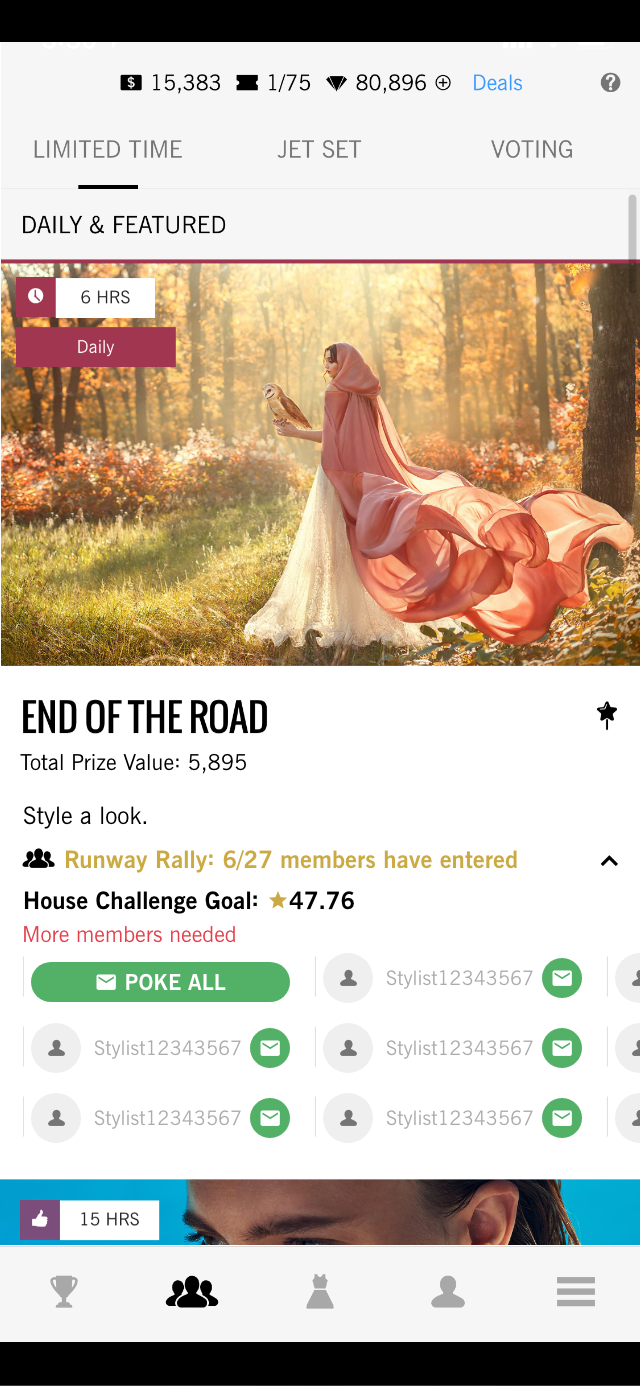
Covet Fashion is a mobile fashion game where players style looks with real brands. The core loop is simple and social:
Pick a challenge
Choose from limited-time and featured styling challenges.
Style a look
Dress an outfit using real-world fashion brands.
Vote / be voted
The community votes on looks, and votes on yours.
Win rewards
Score well and earn rewards.
What is Runway Rally?
Layered on top of that loop, Runway Rally is a highly competitive, community-driven team event — and one of Covet Fashion's largest revenue drivers. Players compete as Fashion Houses, which makes the event only as strong as the communities running it.
The importance of Fashion House leaders
- Leaders are the drivers of participation, not just participants.
- They manage coordination, motivation, and accountability.
- When leaders churn, entire groups lose engagement.
Retaining leaders is critical to sustaining engagement.
Reduce churn among Fashion House leaders
One sentence framed the whole project: reduce churn among Fashion House leaders — the power users of this social system. Every design decision was measured against whether it lightened their load.
Leading a Rally happened outside the game
Our UX research showed leaders doing much of their Rally work outside the game entirely — a fragile, manual workflow stitched across two products.

Track participation
Visit each member's profile page to see who entered.
Match identities
Match each in-game ID with a Facebook ID.
Chase members down
Message members through Facebook to remind them.
Three pain points fell straight out of this — leaders had limited visibility into participation, no reliable way to act on it, and no in-game channel to nudge their members.
Designing with leaders, not just for them
I partnered with UX Research to define the testing methodology and content, then studied the people who feel Rally's pain most acutely.
Method
- 1:1 interviews
- Rally flow mapping
- Mock-up triaging
Participants
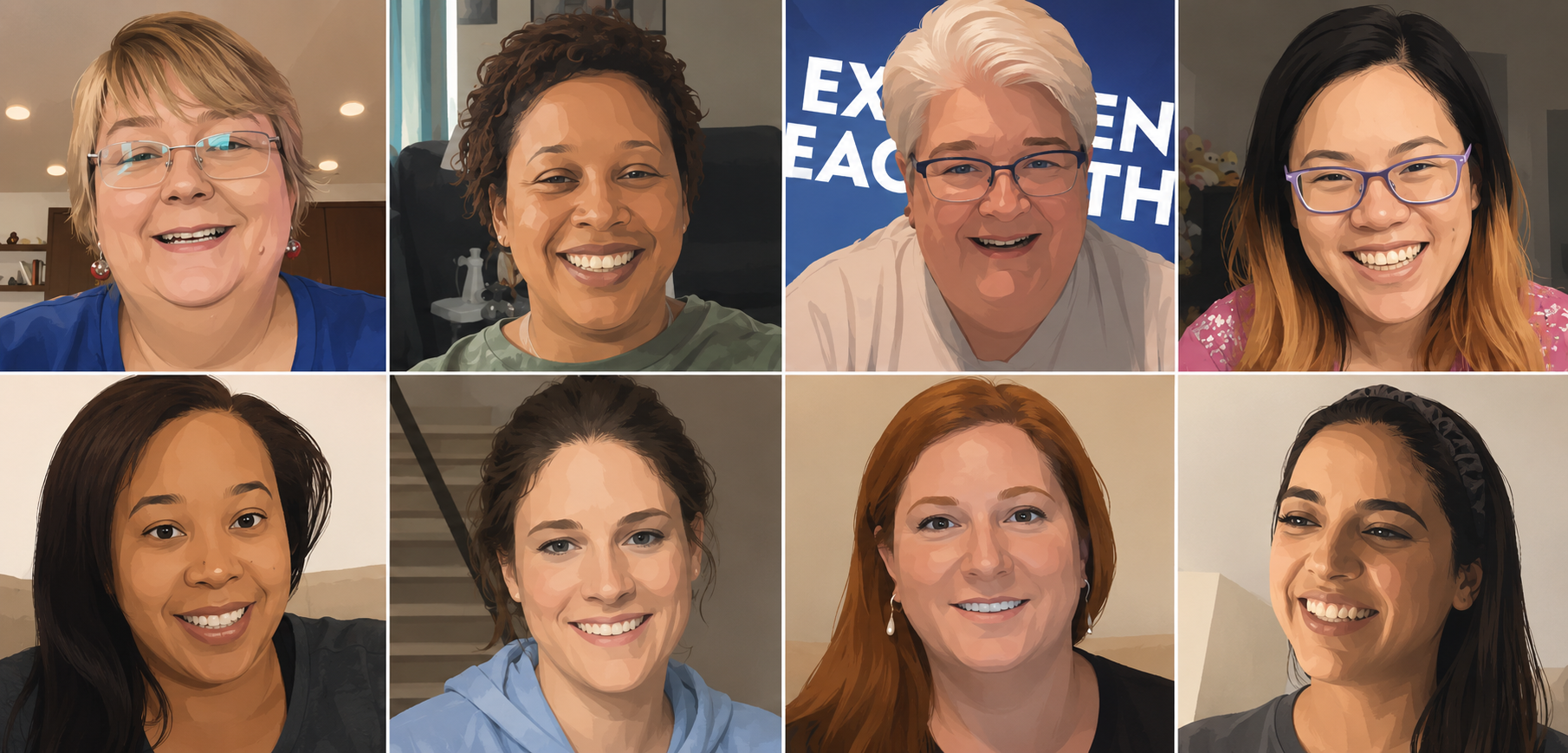
- 5 leaders from model clubs
- 3 leaders from struggling clubs
- Model clubs showed the ceiling; struggling clubs showed the floor.
Their stories ranged widely — from a leader who transformed a struggling Fashion House into a high-performing community, to a player using Covet as a social outlet and community space after personal loss, to a recently-promoted officer deep in day-to-day team management. The design had to lift all of them.
Two design directions, tested
Research compared two approaches — and pointed decisively at the more ambitious one:
Approach 1 · A post report
- A report and management tool after the Rally.
- Useful, but essentially digitizes the spreadsheet.
Approach 2 · Real-time management
- Tools to affect participation during the Rally.
- Preferred by high-performing & struggling leaders alike.
Key findings on Approach 2: it saved 27 minutes–8 hours of manual management time, and increased leaders' willingness to actively manage participation. One leader's verdict —
“This is all I wanted.”
From passive reporting to real-time management
Each pain point got a direct design response, built to simulate what leaders were already doing outside the game — but in-game, in real time.
Make participation visible, on the main feed
The participation tool lives right on the main feed — easy to access — and orders members from “action needed” most to least. A fold function keeps it from overwhelming the feed, giving it an extendable structure with minimal impact on everything else.
Replace the Facebook workaround
Instead of matching IDs and messaging on Facebook, leaders can now notify active and inactive members to participate directly inside Covet — addressing the external tracking and ID-matching steps at once. A post-Rally report and management tool then gives leaders a holistic view to plan the next event, including the ability to toggle off inactive members' participation.
Design trade-offs & decisions
The interesting decisions were in the details of the nudge interaction — balancing social tone, spam prevention, and differing goals for leaders vs. members.
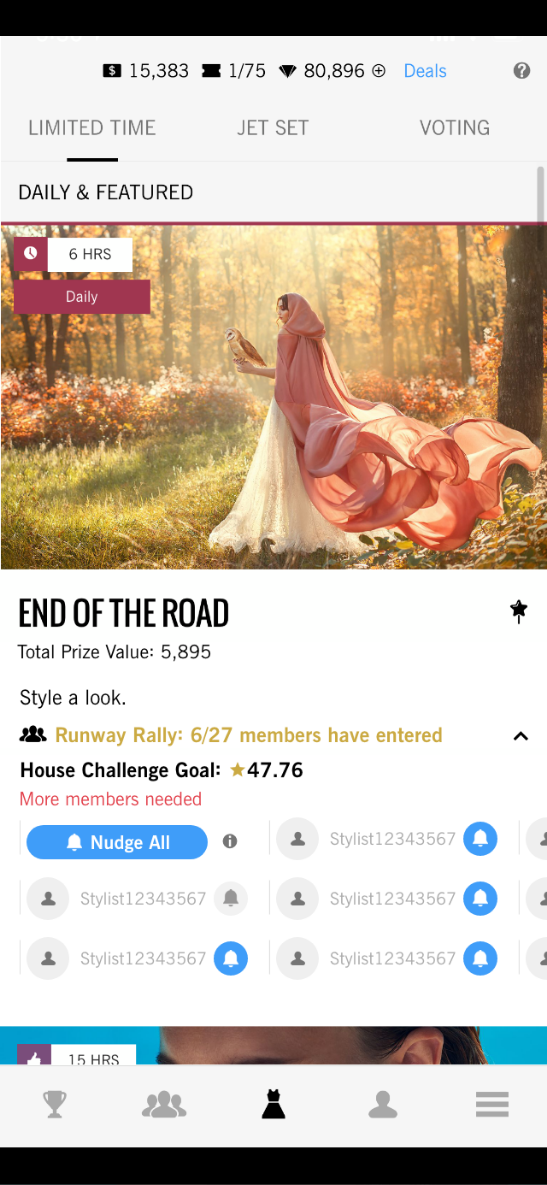
Balanced clarity with a softer social tone.
Prevented spam while encouraging timely action.
Designed around different goals: coordination vs. social encouragement.
Reduced unnecessary actions once participation goals were met.
Leaders stayed — and so did their houses
The feature landed where it mattered most: the health of the communities that drive Rally.
"Thank you for the new update — as a Fashion House leader it's so easy for me to see who is missing in a rally now… I love it!"
"Finally you made it able to see who entered the challenges! Thank you sooooo much!"
"This is literally the best feature that Covet had ever made. Now it's so much easier to see who entered rally challenges."
Closing the loop on adoption
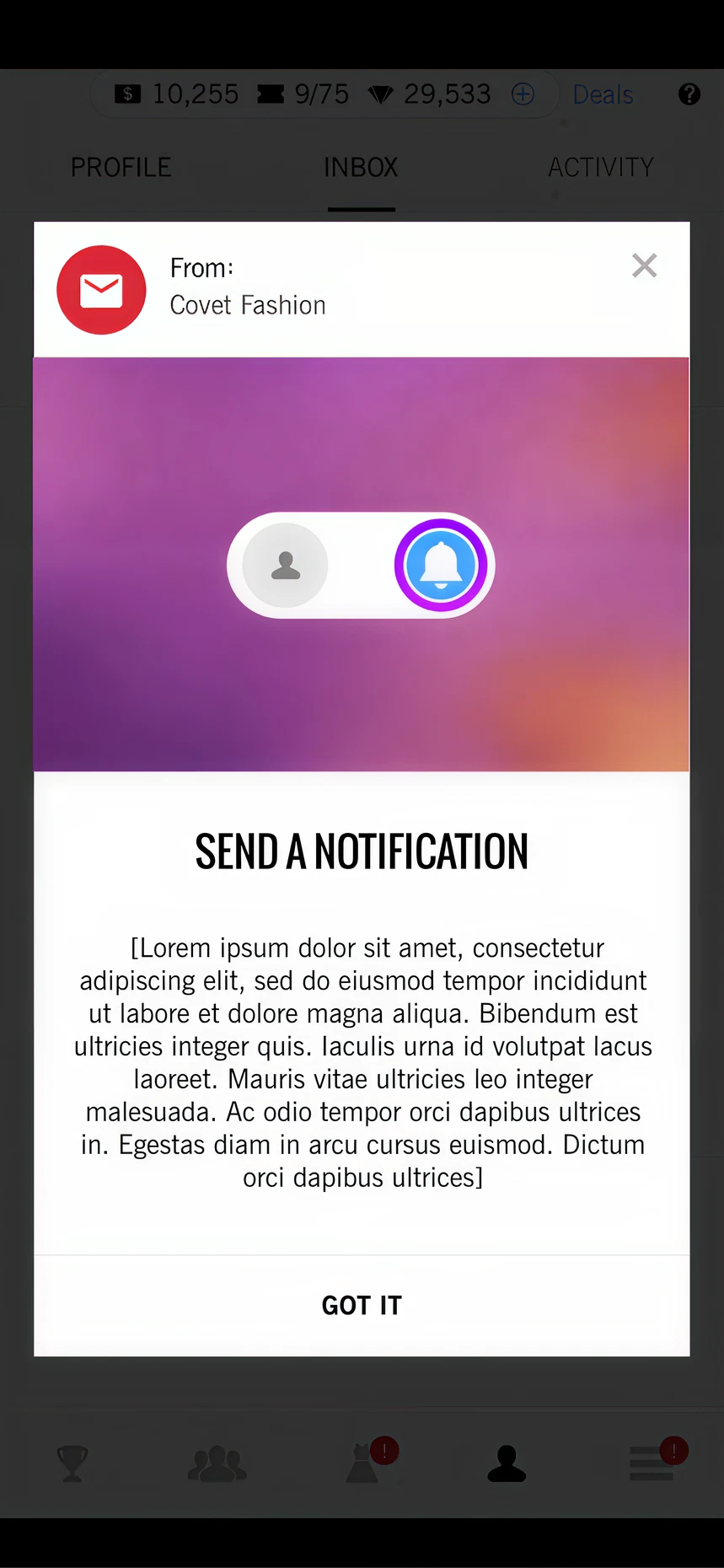
Shipping wasn't the finish line. To drive discovery of the new nudge action, I ran a post-launch optimization: a targeted in-game message — “Let leaders know: Nudge is here!” — with instructive visuals showing leaders and officers exactly how to find and use it.
What I'd carry forward
Real-time system thinking
Shifted the direction from passive reporting to real-time, action-oriented management.
Iterative validation
Used rapid prototyping and UXR testing to validate workflows and refine decisions.
Cross-functional
Partnered closely with PMs, UXR, and engineers to align user needs with business goals and technical constraints.